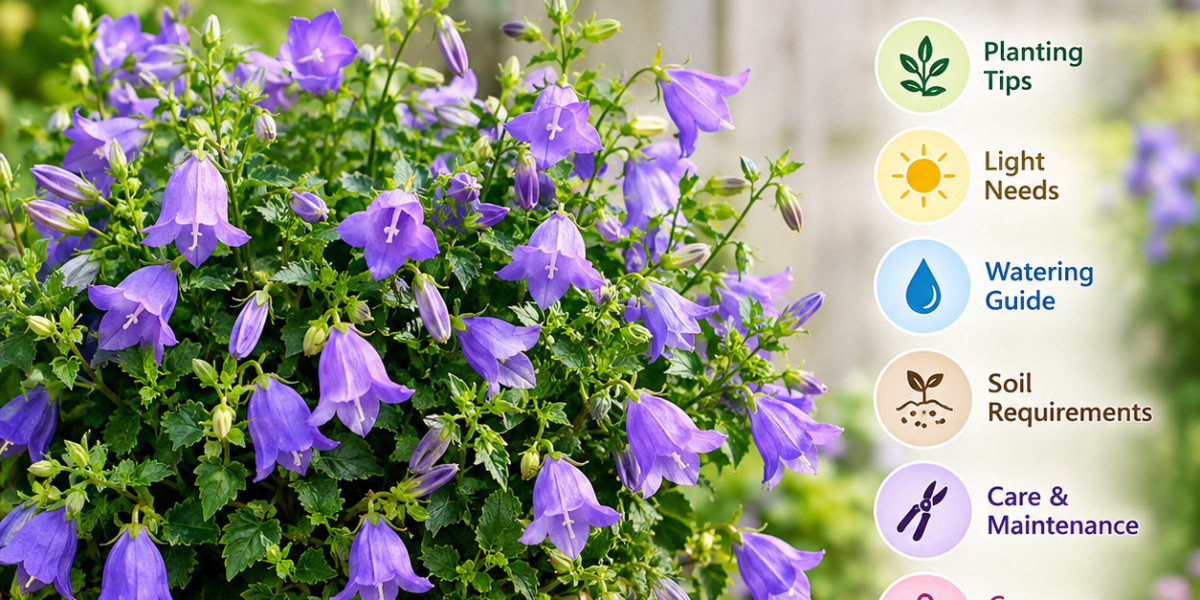

Campanulas are stunning bell-shaped flowers that are present in nature in a number of mesmerizing shades of blue, white, pink, and purple. There are more than 300 species of Campanula that you can choose from that grow in different regions of the Northern Hemisphere. If you are also interested in growing a Campanula plant in your home, then use the directions and conditions present in this guide.
Growing Campanulas
You can start bellflower, also known as Campanula, from seed or from young plants. Pick spring or fall, when days are mild. This helps avoid damage from very hot or very cold weather. Find a place that gets full sun or partial shade. The soil should drain well and be fairly fertile. If your area is hot, give some shade in the afternoon.
Work the soil where you will plant. Mix in compost or similar organic material. Dig a hole that is a bit wider than the root ball, but the same depth.
Take the plant out of its container. If the roots are tight in the pot, gently loosen them. Set the plant in the hole. Make sure the top of the root ball sits level with the ground around it.
Backfill with soil, press it down lightly, and remove trapped air. Then water well. Keep watering often until the plant settles in. Set plants about 1 to 3 feet apart. The exact spacing depends on the type you grow.
Caring for a Campanula Plant
Temperature - Bellflower likes warm daytime weather and cooler nights. It does not handle extreme heat well.
Soil - For best results, use soil that is rich and drains well. Aim for a pH between 6 and 8. Some kinds can handle rougher ground too, like clay or rocky soil. If you are growing in pots, use a good all-purpose potting mix.
Watering - Bellflower generally needs water in the moderate range. A few types can handle dry spells better than others. Keep the soil moist, not wet. Letting it sit soggy can cause problems. Also, do not let the soil dry out.
Source: Abodelook