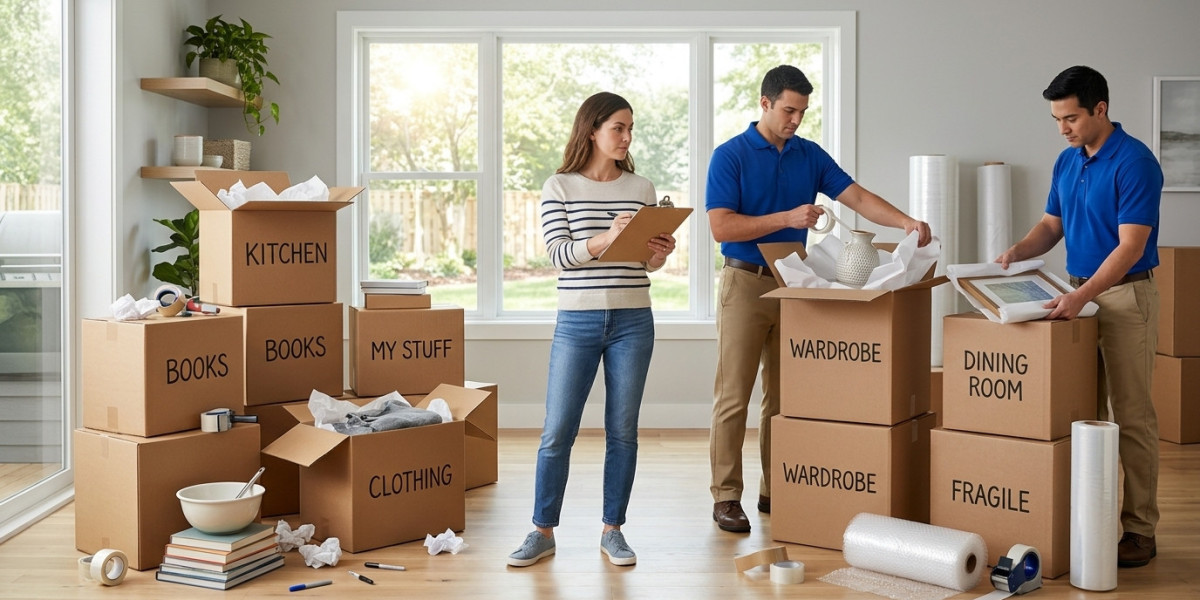

Moving comes with dozens of decisions, but one of the biggest is surprisingly simple: should you pack everything yourself, or should you let professional Movers pack your belongings?
Packing yourself can reduce moving expenses and give you complete control over how your possessions are organized. Professional packing, on the other hand, can save significant time, reduce physical work, and provide experienced handling for fragile or difficult items.
Neither option is automatically better for everyone. Your budget, schedule, household size, valuables, and comfort level should all influence your decision.
Before filling your first box—or paying a moving company to do it—here's what you should know about professional packing versus DIY packing.
What Does Professional Moving Packing Include?
Many full-service moving companies offer packing as an additional service.
Depending on the company and service package, professional packers may provide boxes and packing materials, wrap fragile belongings, pack household items, prepare furniture for transportation, label boxes, and sometimes unpack everything at your new home.
You may also have several service levels to choose from.
Full packing generally means the moving crew packs most eligible household belongings.
Partial packing allows you to choose specific rooms or items for professional help. For example, you might pack your clothes and books yourself but hire movers to handle your kitchen, artwork, mirrors, and fragile decorations.
Always ask what's included before agreeing to professional packing because services and charges vary between companies.
Why Should You Let Movers Pack Your Belongings?
Convenience is probably the strongest argument for professional packing.
Packing an entire home can take considerably longer than people expect. You aren't simply placing objects inside boxes. You need to sort belongings, obtain supplies, protect fragile objects, label containers, disassemble certain items, and determine what you'll need immediately after arriving.
Professional packers perform this work regularly and can generally complete it much faster.
Hiring packers can be especially useful when you're:
- Moving on short notice
- Relocating a large household
- Moving long-distance
- Working during the moving process
- Physically unable to handle extensive packing
- Transporting many fragile possessions
- Managing a complicated relocation
Professional packing can transform several stressful days of preparation into a much more manageable process.
What Are the Benefits of Packing Yourself?
DIY packing offers two major advantages: lower costs and greater control.
Because professional packing is an additional moving service, doing the work yourself can reduce labor and material expenses.
You also decide exactly how everything is organized.
You can place frequently used belongings together, create detailed labels, keep important possessions separate, and know precisely which box contains your coffee maker on your first morning in the new home.
Packing yourself also gives you an opportunity to declutter.
As you work through cabinets, closets, and storage areas, you can decide what should be donated, sold, recycled, discarded, or moved.
If professional packers arrive before you've decluttered, you could end up paying someone to pack belongings you don't actually want.
Which Option Is Cheaper?
Packing yourself will usually be less expensive from a direct moving-cost perspective.
When movers provide packing services, you're paying for professional labor and potentially boxes, tape, protective materials, specialty containers, and other supplies.
The total price can depend on the size of your home, amount of property, number of packers, materials required, and complexity of the job.
For interstate moves, packing is considered an additional service that can affect the total moving price.
That's why you should get packing charges included in your written estimate.
Don't assume a moving quote automatically includes packing just because you're hiring a “full-service” mover. Ask what the quoted amount actually covers.
Do Professional Movers Pack Better Than Homeowners?
Experienced professional packers generally have an advantage when dealing with fragile, bulky, or unusually shaped objects.
They routinely handle dishes, glassware, mirrors, lamps, artwork, electronics, and furniture.
Professional crews may also have access to specialized materials and containers that homeowners don't normally keep around the house.
However, “professional” doesn't automatically mean careful.
The quality of packing depends on the moving company and the employees performing the work.
Research the company before hiring it. Verify applicable licensing or registration, read your estimate carefully, examine complaint patterns, and understand who will actually perform the move.
Consumer-awareness resources such as Moving Scam Stories can help consumers recognize patterns reported in problematic moving experiences, while official regulatory records should be used to verify a mover's registration and authority.
You should investigate the company before giving its workers access to virtually everything you own.
Does Packing Yourself Affect Damage Claims?
This is an important consideration that can easily be overlooked.
For interstate moves, federal consumer guidance notes that packing your own boxes can make it more difficult to establish a claim against the mover if items inside those boxes are damaged.
Imagine unpacking a box and discovering several broken glasses.
A dispute could arise over whether the glasses were damaged during transportation or were inadequately protected when you packed them.
Professional packing can provide a clearer record that the moving company controlled the packing process, although it doesn't guarantee that every damage claim will automatically be approved.
Before moving, understand your selected liability protection.
Interstate movers must offer Full Value Protection and Released Value. Released Value provides only limited protection at 60 cents per pound per article, while Full Value Protection provides substantially broader protection subject to applicable terms.
Don't confuse mover liability with ordinary insurance. Ask the company to explain your options in writing.
What Items Should You Pack Yourself Even With Full-Service Movers?
Paying for full-service packing doesn't mean you should hand over absolutely everything.
Certain possessions should generally remain under your personal control.
These can include:
- Passports and identification
- Cash
- Credit and debit cards
- Important financial documents
- Prescription medications
- Jewelry
- House and vehicle keys
- Essential electronics
- Legal documents
- Irreplaceable sentimental items
Keep anything you'll need during the move in a separate personal bag or box and clearly tell the packing crew not to load it.
You should also ask the mover which materials and belongings it won't transport.
Hazardous or dangerous materials can be restricted, and federal rules prohibit shipping hazardous materials in household-goods boxes without properly informing the mover.
Never hide prohibited materials inside an ordinary box.
What About Expensive and High-Value Items?
Discuss valuable belongings with the mover before packing day.
For interstate moves, federal moving rules identify articles valued at more than $100 per pound as items of extraordinary value.
These might include certain jewelry, antiques, collectibles, artwork, or other high-value possessions.
Failure to notify your mover appropriately about high-value articles can affect the mover's liability.
Create a detailed inventory and take photographs before packing.
For exceptionally valuable or irreplaceable objects, you may prefer to transport them personally when practical.
Is Partial Packing the Best Compromise?
For many households, yes.
Partial packing combines the cost savings and organizational control of DIY packing with professional assistance where it's most useful.
You might pack:
Clothing, linens, books, toys, pantry items, and other straightforward belongings yourself.
Then let movers handle:
Dishes, glassware, artwork, mirrors, lamps, televisions, delicate decorations, and other difficult items.
This approach can reduce professional packing costs while still providing expert assistance with belongings most vulnerable to damage.
It can also make packing feel less overwhelming.
How Do You Pack Safely If You Choose DIY?
If you're packing yourself, start early rather than trying to finish everything the night before moving day.
Use sturdy boxes that can withstand stacking and transportation. Avoid making boxes excessively heavy.
Place heavier objects near the bottom and lighter items above them. Use appropriate cushioning around fragile belongings and fill empty spaces that could allow items to shift.
Label boxes clearly with both their contents and destination room.
Mark fragile boxes prominently, but don't assume a “FRAGILE” label compensates for inadequate packing.
Take photographs of valuable belongings before sealing boxes. You may also want to maintain a basic box inventory so you can identify missing containers at delivery.
How Do You Choose a Professional Packing Service?
Don't hire a company solely because its packing price is low.
If you're moving interstate, verify that the mover is properly registered and has appropriate operating authority. For a move within one state, investigate applicable state requirements.
Ask the company:
What exactly does the packing service include?
Are packing materials included?
How are fragile items handled?
Are specialty boxes extra?
Who performs the packing?
How are boxes labeled?
What items won't the company pack?
What happens if professionally packed belongings are damaged?
Get important answers in writing.
For interstate moves, the written estimate should include transportation charges and applicable additional services, including packing services you've requested.
What Are the Red Flags When Hiring Packers?
Be cautious if a moving company won't clearly explain its packing fees or insists that pricing will be determined only after everything is packed.
Other warning signs can include unusually large upfront payment demands, missing registration information, unclear company identities, vague contracts, unexplained last-minute charges, and pressure to sign documents you haven't had time to review.
Also watch for a company that refuses to explain its liability options.
Professional packing requires substantial trust. The company may have access to bedrooms, closets, cabinets, electronics, personal belongings, and valuable possessions.
That makes verification particularly important.
Frequently Asked Questions
Should movers pack your belongings or should you pack yourself?
Professional packing is usually better for convenience, speed, and difficult items. DIY packing is generally better for reducing costs and maintaining control. Partial packing provides a useful compromise.
Is it worth paying movers to pack?
It can be, particularly for large homes, long-distance relocations, tight schedules, fragile possessions, or people who can't physically manage extensive packing.
Does it cost more if movers pack your belongings?
Yes. Professional packing is typically an additional service involving labor, materials, or both. Ask for packing charges to be clearly included in your estimate.
Can movers pack everything?
No. Moving companies may restrict hazardous, dangerous, perishable, or other prohibited belongings. Always request the company's prohibited-items policy before packing day.
Can I pack some belongings and have movers pack the rest?
Yes. Many moving companies offer partial packing. This allows you to handle easy items yourself while paying professionals to pack fragile or complicated possessions.
Final Thoughts
Whether you should let movers pack your belongings or pack everything yourself ultimately depends on what matters most to you.
If your priority is saving money and maintaining complete control, DIY packing may be the better choice. If you're short on time, have many fragile possessions, or want to reduce the workload associated with moving, professional packing may justify the additional cost.
For many people, partial packing offers the best balance.
Whatever you choose, research your mover, get packing charges in writing, understand liability protection, photograph valuable belongings, and personally transport important documents and irreplaceable possessions.
Packing isn't just about getting everything into boxes. The goal is to get your belongings from one home to another safely, efficiently, and with as few surprises as possible.