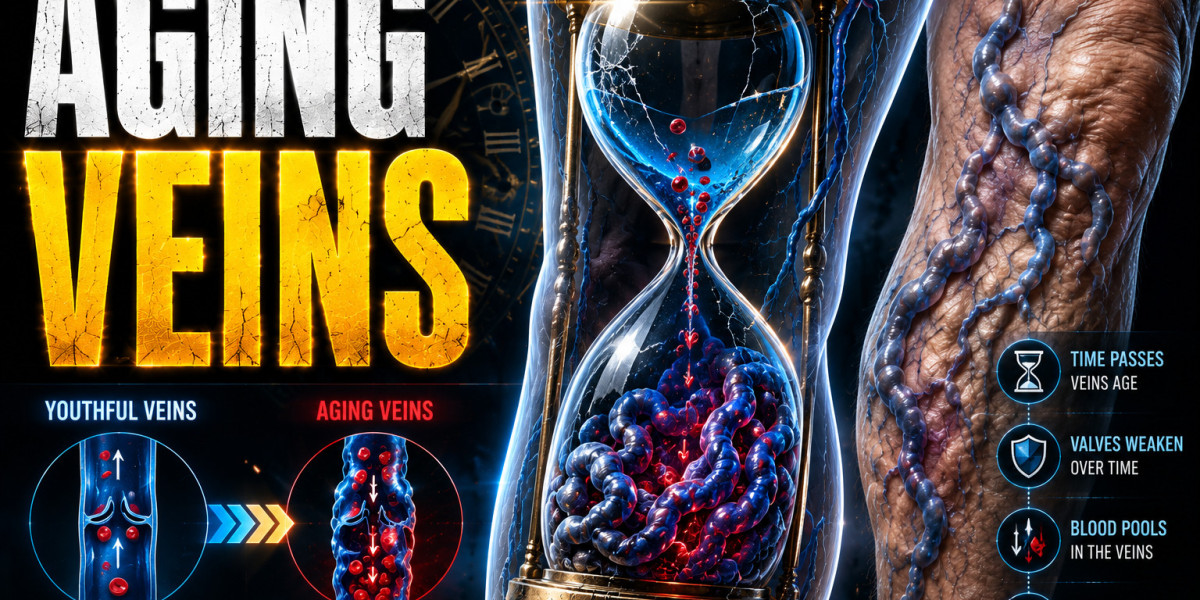

Varicose veins become more common with age because the veins and their one-way valves naturally lose strength and elasticity over time. As these valves become less efficient, blood is more likely to flow backward and collect inside the veins, increasing pressure and causing the veins to enlarge. Although ageing is an important risk factor, not everyone develops varicose veins, and factors such as genetics, lifestyle, pregnancy, and prolonged standing also contribute.
Many people assume visible leg veins are simply a normal part of getting older. However, ageing often makes underlying vein disease more noticeable rather than causing it on its own. Understanding varicose veins helps explain why they become more common with age and why symptoms should not be ignored.
How Do Healthy Veins Function?
Veins carry blood from the legs back to the heart.
Inside the veins are one-way valves that:
Prevent blood from flowing backward
Keep blood moving upward
Maintain healthy circulation
Reduce pressure within the veins
When these valves function normally, blood does not pool inside the leg veins.
How Does Ageing Affect the Veins?
As people age, natural changes occur throughout the circulatory system.
These changes include:
Reduced elasticity of vein walls
Gradual weakening of vein valves
Slower circulation in some individuals
Increased pressure within the leg veins
These age-related changes make it easier for blood to collect inside the veins.
Why Do Vein Valves Become Less Effective Over Time?
The one-way valves inside veins open and close thousands of times every day.
Over many years:
The valves may no longer close tightly.
Small gaps can develop between the valve leaflets.
Blood begins to flow backward.
Pressure inside the veins gradually increases.
According to the Society for Vascular Surgery, valve dysfunction and venous reflux are the primary causes of varicose veins.
Does Age Alone Cause Varicose Veins?
No.
Age increases the risk, but it is usually one of several contributing factors.
Other common risk factors include:
Family history
Pregnancy
Obesity
Hormonal changes
Prolonged standing
Long periods of sitting
Many younger adults also develop varicose veins if these risk factors are present.
Why Are the Legs More Affected?
The veins in the legs work continuously against gravity.
As people grow older:
Veins work harder to return blood to the heart.
Blood may remain in the lower legs for longer.
Venous pressure gradually increases.
This explains why varicose veins most commonly appear in the legs rather than other parts of the body.
What Symptoms May Develop With Age?
Older adults may experience:
Enlarged, twisted veins
Aching or heavy legs
Swelling around the ankles
Burning or throbbing sensations
Night-time leg cramps
Itching near the affected veins
Symptoms often become more noticeable after standing for long periods.
Can Untreated Varicose Veins Worsen Over Time?
Yes.
Without appropriate treatment, varicose veins may gradually progress and lead to:
Persistent swelling
Skin discolouration
Venous eczema
Hardening of the skin
Venous leg ulcers in advanced cases
Early assessment helps identify vein disease before complications develop.
How Do Doctors Evaluate Age-Related Varicose Veins?
Doctors usually begin with:
Medical history
Physical examination
A Venous Doppler Ultrasound is commonly performed to assess:
Blood flow
Valve function
Venous reflux
The location of affected veins
This examination helps determine the severity of vein disease and guides treatment planning.
Can Older Adults Still Receive Minimally Invasive Treatment?
Yes.
Many older adults are suitable candidates for modern minimally invasive procedures, depending on their overall health and ultrasound findings.
Treatment options may include:
Endovenous Laser Treatment (EVLT)
Radiofrequency Ablation (RFA)
Ultrasound-guided foam sclerotherapy
These procedures are designed to treat the diseased veins while preserving healthy circulation.
Conclusion
Varicose veins become more common with age because the vein walls and one-way valves naturally lose strength over time, making it easier for blood to collect inside the veins. However, ageing is only one part of the picture. Genetics, pregnancy, obesity, prolonged standing, and hormonal changes also contribute to the development of chronic vein disease. Recognising symptoms early allows timely evaluation before the condition progresses.
Today, minimally invasive treatments can effectively treat the underlying cause of varicose veins without traditional surgery. Procedures such as Endovenous Laser Treatment (EVLT) and Radiofrequency Ablation (RFA) help close diseased veins, improve circulation, and relieve symptoms. Individuals seeking specialised care can consult an interventional radiologist Jaipur to discuss the most appropriate treatment based on their symptoms and ultrasound findings.
Frequently Asked Questions
Why do varicose veins become more common as people get older?
Ageing gradually weakens the vein walls and one-way valves, making it easier for blood to flow backward and collect inside the veins.
Can young people develop varicose veins?
Yes. Although the risk increases with age, younger adults can also develop varicose veins due to genetics, pregnancy, obesity, or prolonged standing.
Does ageing always lead to varicose veins?
No. Many older adults never develop varicose veins. Age increases the risk, but other factors also play an important role.
How are age-related varicose veins diagnosed?
Doctors typically perform a physical examination and a Venous Doppler Ultrasound to evaluate blood flow, valve function, and venous reflux.
Can older adults undergo minimally invasive treatment for varicose veins?
Yes. Many older adults are suitable candidates for minimally invasive procedures such as Endovenous Laser Treatment (EVLT), Radiofrequency Ablation (RFA), or ultrasound-guided foam sclerotherapy after appropriate medical evaluation.


