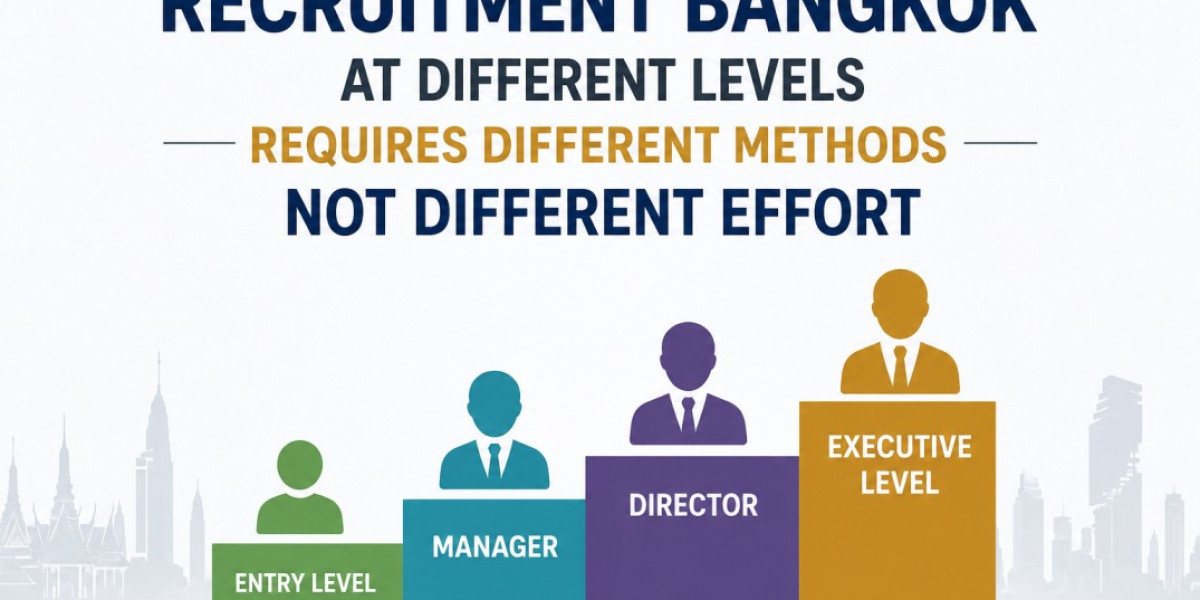

Employers often assume that hiring at different levels is essentially the same activity, just with more effort at the top. In practice, effective Recruitment Bangkok at junior, mid and senior levels uses methods that differ significantly, and treating them as the same activity is the reason many senior hires disappoint. Effort is not the differentiator; method is.
Why The Assumption Of Sameness Is So Common
Because from the outside, the process looks similar. Brief, search, interviews, offer. What is different is what happens inside each step, and those differences matter more at higher levels. Employers who commission senior hires the same way they commission junior ones tend to be disappointed with the result, and often blame the market rather than the method.
What Junior And Mid-Level Recruitment Actually Requires
At these levels, active candidates are plentiful and reachable through advertising, job boards and existing networks. The recruitment process is largely a filtering exercise. Speed matters, coverage matters, quality of screening matters. A capable Bangkok recruiter delivers a strong shortlist quickly, manages the interview process, and closes the offer. This works because the underlying assumptions hold: the candidates are looking, and the differentiators between them are relatively easy to assess.
What Executive Search Bangkok Actually Requires
At senior level, the underlying assumptions do not hold. The strongest candidates are almost never actively looking. They are performing in current roles, watched by their own employers, and rarely responsive to unsolicited cold outreach. Reaching them requires mapping the market first, identifying specific individuals, and approaching them through networks or directly with trust built over previous interactions. Executive Search Bangkok is a research-led, patient discipline that produces a shortlist of a few, not a stack of many, and the timeline is different from standard recruitment.
The Assessment Difference
Junior and mid-level assessment tests capability against a defined role. Senior assessment tests something wider: leadership style, judgement under pressure, ability to shape a team, cultural fit with the specific business. These cannot be interviewed for directly; they emerge through longer conversations, deeper references, and sometimes structured assessment. A recruiter using standard interview methods for a senior role is testing the wrong things, and the misjudgement often only becomes visible six months in.
The Close Difference
Between offer and start date, senior hires are far more likely to fall through than junior ones. Counter-offers arrive from current employers, and they are usually substantial. Family considerations weigh heavily on senior candidates. Late doubts surface. A capable senior search consultant stays actively involved through this window, managing the resignation and the early weeks of onboarding. A standard recruiter treats the offer as the finish line, and often loses the placement in the following weeks.
Why Effort Alone Cannot Bridge The Gap
Some employers assume that a diligent recruiter working harder can substitute for a search-oriented process. It cannot. Volume methods and search methods use different networks, different assessment tools, and different close disciplines. More effort in a volume process produces more candidates, not the right candidate. This is why treating a senior hire as a scaled-up junior hire tends to produce a longer version of the same disappointment. Employers commissioning Recruitment Bangkok at senior level should ensure the firm is genuinely equipped for search, not just for volume.
How To Match The Method To The Role Before The Search Starts
The simplest test is to ask, at the briefing conversation, how the firm will actually source. If the answer is advertising, job boards and existing databases, it is a volume method. If the answer is market mapping, targeted direct approach and named individuals, it is a search method. Both are legitimate, but they suit different roles, and matching the method to the role is more important than any other single decision in the engagement.
Frequently Asked Questions
Why does the assumption that senior recruitment is scaled-up junior recruitment fail?
Because the underlying assumptions differ. Junior candidates are actively looking; senior candidates are not. Volume methods reach the former but not the latter, so senior hires produced through volume methods tend to be weaker than they should be.
How do assessment methods differ between volume and senior recruitment?
Volume assessment tests capability against a role specification. Senior assessment tests leadership style, judgement under pressure, and cultural fit, which emerge through longer conversations and deeper references rather than standard interviews.
Why do senior hires fall through more often between offer and start date?
Because senior candidates receive substantial counter-offers, weigh family considerations more heavily, and are watched more closely by current employers. Active management of this window is essential.
How can employers confirm the method matches the role?
Ask at the briefing conversation how the firm will source. Advertising and databases indicate volume methods; market mapping and direct approach indicate search methods. Both are valid but suit different roles.


