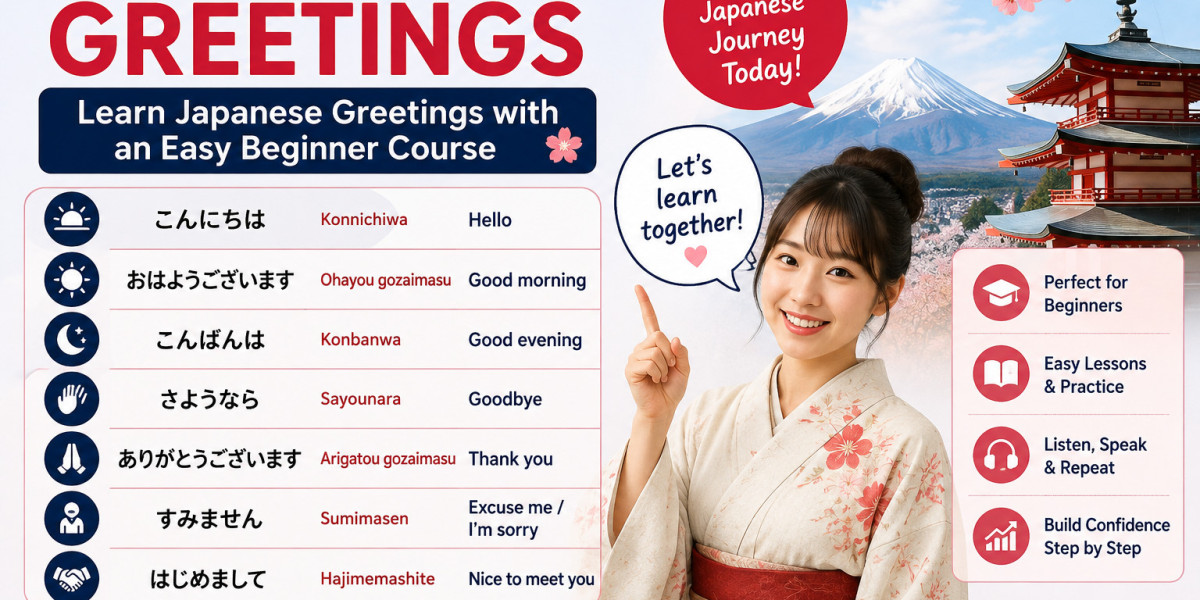

In Japan, greetings (aisatsu, 挨拶) are far more than small talk they're a daily ritual that signals respect, awareness of social context, and cultural fluency. Whether you're planning a trip to Tokyo, starting a new job with Japanese colleagues, or simply want to sound less like a textbook and more like a local, knowing how to greet people properly is one of the fastest ways to make a good impression. If you're just starting to learn Japanese greetings, this guide breaks down the ten you'll use the most, along with when and how to use them naturally.
1. Ohayou Gozaimasu (おはようございます) Good Morning
This is the polite way to say "good morning," used until around 10 or 11 a.m. Among close friends or younger coworkers, it's often shortened to just "Ohayou." You'll hear this constantly in workplaces, schools, and even from shopkeepers as they open up for the day. It's usually one of the first phrases taught to anyone starting to learn Japanese greetings, since mornings are when most social interactions begin.
2. Konnichiwa (こんにちは) Hello / Good Afternoon
Perhaps the most internationally recognized Japanese word, "konnichiwa" is used from late morning through early evening. It's polite enough for strangers but not overly formal, making it a safe, all-purpose greeting for daytime encounters with shop staff, neighbors, or people you're meeting for the first time.
3. Konbanwa (こんばんは) Good Evening
As the sun sets, "konnichiwa" gives way to "konbanwa." It follows the same tone and formality level, simply shifting the time of day. Interestingly, this phrase is not typically used as a farewell it's strictly an evening hello.
4. Oyasumi Nasai (おやすみなさい) Good Night
Used when parting ways at night or right before sleep, "oyasumi nasai" carries a warm, caring tone. Among family or close friends, it's often shortened to "oyasumi." Unlike "konbanwa," this one is a farewell it marks the end of the day's interactions.
5. Sayounara (さようなら) Goodbye
While textbooks teach this as the standard word for goodbye, in real life it carries a slightly formal, sometimes even dramatic weight implying you won't see the person again for a while. Japanese speakers more commonly use phrases like "mata ne" (see you) or "ja, mata" (well then, see you later) in casual settings.
6. Hajimemashite (はじめまして) Nice to Meet You
This phrase is reserved exclusively for first meetings. It's typically followed by your name and a polite closing phrase like "yoroshiku onegaishimasu." Together, these two phrases form the backbone of any proper introduction in Japan, whether in business or casual settings.
7. Yoroshiku Onegaishimasu (よろしくお願いします) Please Treat Me Well / Looking Forward to Working With You
There's no perfect English equivalent for this one, which is part of what makes it fascinating for anyone starting to learn Japanese greetings. It's used after introductions, before starting a collaboration, or when asking for someone's goodwill and support going forward. Its flexibility appropriate in business meetings, sports teams, and social introductions alike makes it one of the most useful phrases you'll ever learn.
8. O-genki Desu Ka (お元気ですか) How Are You?
Unlike in English, this isn't used as a casual, everyday check-in. Japanese people don't typically ask "how are you" every time they see each other it's reserved for occasions when you haven't seen someone in a while. Asking it too frequently can actually sound a bit unnatural.
9. Itterasshai (いってらっしゃい) and Tadaima (ただいま) Send-off and "I'm Home"
These two work as a pair. "Itterasshai" is said to someone leaving the house (roughly "go and come back safely"), while "tadaima" is said upon returning home, meaning "I'm back." The natural reply to "tadaima" is "okaeri" or "okaerinasai" "welcome back." This exchange reflects the deep sense of household connection embedded in everyday Japanese life.
10. Otsukaresama Desu (お疲れ様です) Thank You for Your Hard Work
A workplace essential, this phrase acknowledges someone's effort and is used both as a greeting and a farewell among coworkers after a meeting, at the end of the day, or even in passing in the hallway. It reflects a broader cultural value: recognizing shared effort, no matter how small the task.
Why Greetings Matter So Much in Japanese language school
Aisatsu isn't just vocabulary it's etiquette. Using the right greeting at the right time shows attentiveness to social context, time of day, and relationship dynamics, all of which are deeply valued in Japanese communication. As you continue to learn japanese language school, pay attention not just to the words themselves, but to when native speakers use them. Context is everything.
Start incorporating these ten phrases into your daily practice, and you'll notice an immediate shift in how naturally you engage with Japanese speakers whether you're traveling, working, or simply building a new language habit.